The MASTER FILES TEXTS.
📌 Notice to Readers and Contributors
This page contains the texts of three files including the canonical text of the document:
“NDEV / HSBN / World Digital Currency (WDC) — Conceptual Core”
The text below reflects:
• the technical and conceptual rationale of the NDEV Code–based WDC,
• the architecture of a conflict-neutral Legal Tender model,
• the reasoning behind replacing bank-money settlement with resource-anchored digital value.
This document is published as text only, without interpretation, marketing, or simplification.
Intellectual Status & Use
This text represents an original conceptual and technical work. It is published for:
• expert review,
• regulatory analysis,
• standards discussion,
• AI-assisted evaluation within the NDEV / WDC Portal.
• It does not constitute:
• financial advice,
• an offer,
• a product specification,
• or an implementation instruction.
Readers may quote or reference the text with attribution, but should preserve its integrity and context.
Versioning & Integrity
Document name: NDEV_HSBN_WDC_MASTER_FILE_v1.0_CANONICAL.txt
Status: Canonical reference (text)
Version: v1.0 (LOCKED)
Any derivative work or proposal should clearly state:
• assumed version,
• scope of change,
• and whether it is compatible with the Conceptual Core.
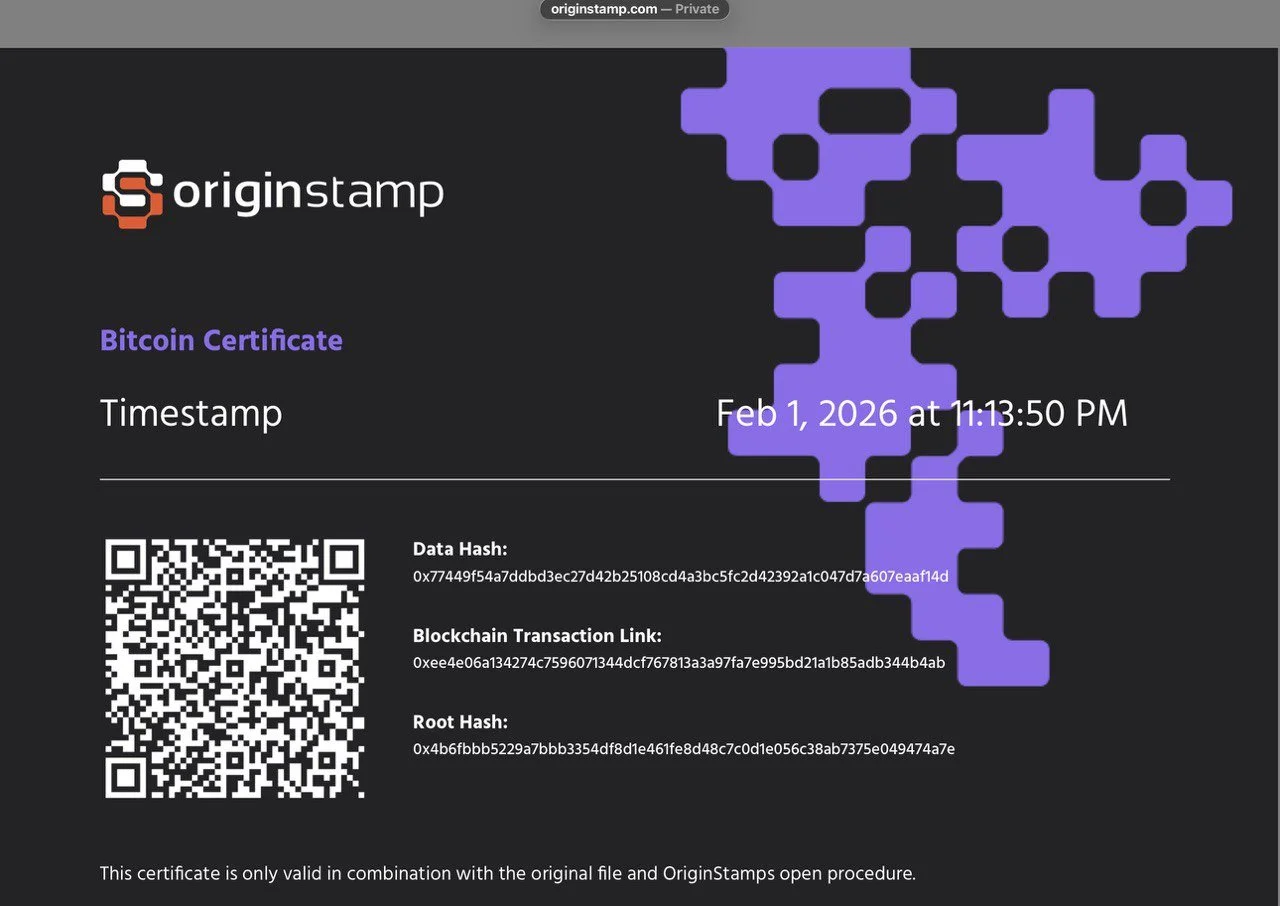
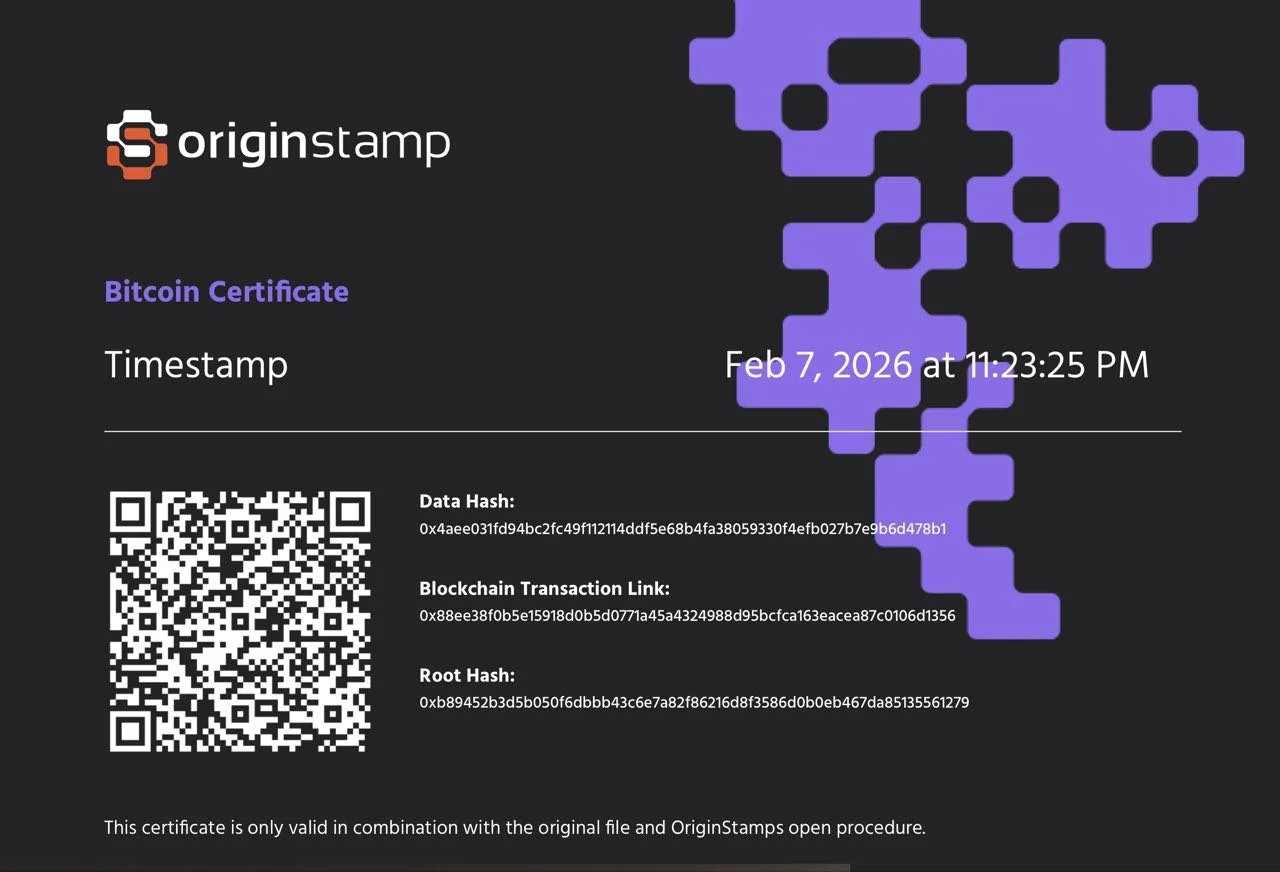
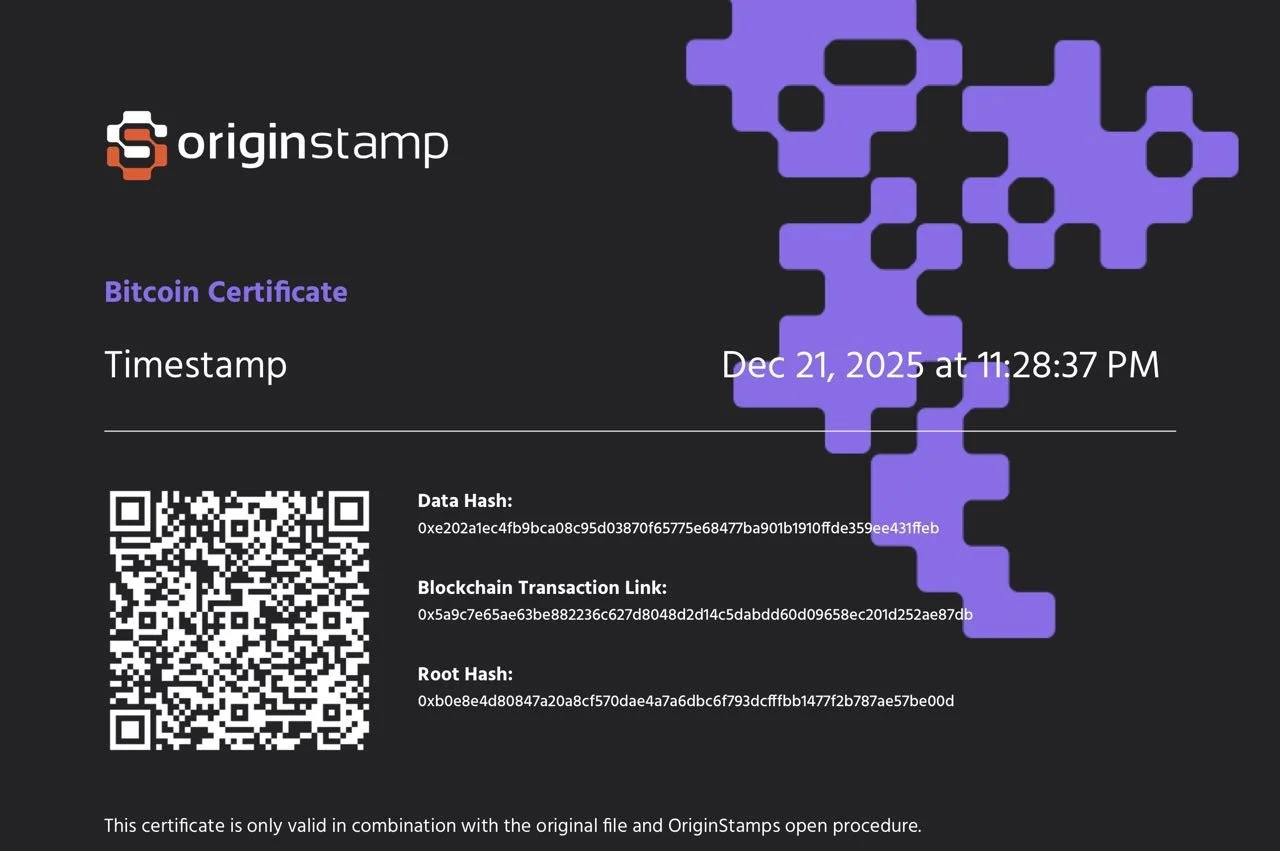
For authorship, priority, and audit purposes, this document is maintained in secured copies with cryptographic hashes and independent timestamps.
==================
==================
The MASTER FILE TEXT NDEV / HSBN / WDC :
NDEV / HSBN / WDC
MASTER FILE v1.0
Status: LOCKED
Timeframe: 2019–2025
============================================================
SECTION A — MASTER CONCEPTUAL CORE
============================================================
Purpose:
This document is the single source of truth for the NDEV / HSBN / WDC system.
It enables full reconstruction from zero, without narrative or marketing layers.
A1. Foundational Problem:
Wars arise from structural competition between financial systems.
Root causes include control over units of account, settlement rails,
resource pricing, and liquidity issuance.
As long as money is debt-based and abstracted from real resources,
conflict is structurally inevitable.
A2. Core Insight:
Money is not value. Money is a measurement and transport mechanism.
NDEV replaces indirect representation and debt issuance with
resource-anchored value and neutral settlement logic.
A3. Canonical Definitions:
NIW — National Item of Wealth:
Real, measurable resources within a sovereign territory.
NEV — National Equivalent of Value:
A mathematical abstraction converting NIWs into a unified value space.
NEV is non-tradable.
NDEV — National Digital Equivalent of Value:
A digital, geo-bound, non-speculative representation of NEV.
NDEV is not money and not debt.
HSBN — Highly Scalable Blockchain Network:
Neutral reconciliation infrastructure.
No currency, no balances, no monetary policy.
WDC — World Digital Currency:
An ephemeral exchange envelope used only during cross-border settlement.
WDC returns to zero by design.
A4. Boundaries:
NDEV is not fiat, not CBDC, not cryptocurrency, not stablecoin,
not tokenised fiat, and not a reserve currency.
A5. Conflict Elimination:
No inflation export, no settlement weaponisation,
no reserve currency dominance, and no accumulation advantage.
A6. Governance Rule:
No unilateral modification of NDEV logic.
All changes require multilateral consensus and mathematical verification.
Lock Status:
Conceptual Core v1.0 — LOCKED
============================================================
SECTION B — ENGINEERING REFERENCE PACK
============================================================
Purpose:
Defines deterministic logic for implementation, simulation,
verification, and corruption detection.
B1. System Layers:
L0 Physical Reality (NIW)
L1 Valuation (NEV engine)
L2 Representation (NDEV codes)
L3 Settlement (HSBN)
L4 Exchange Envelope (WDC)
B2. Core Invariants:
- Conservation of value
- Zero residual debt
- Mandatory geo-binding
- No accumulation advantage
- Deterministic replay
B3. NDEV Abstract Data Model:
Territory ID
Resource class vector
NEV magnitude
Timestamp
Geo-proof
State hash
Explicitly excluded:
Ownership, interest, speculative metadata.
B4. State Transitions:
Domestic: NIW → NEV → NDEV update
Cross-border: Export/import → HSBN reconciliation → WDC transient → zero
B5. HSBN Constraints:
HSBN holds no balances, issues no value, prices nothing.
Its sole function is verification.
B6. Failure Modes:
Residual WDC, NDEV hoarding, geo-proof mismatch,
or non-conservative NEV trigger rejection or freeze.
B7. AI Interaction Rule:
AI may verify, simulate, and audit.
AI may not govern, optimize valuation logic, or impose policy.
Lock Status:
Engineering Reference Pack v1.0 — LOCKED
============================================================
SECTION C — DECISIONS & RATIONALE
============================================================
Purpose:
Documents rejected alternatives to prevent regression.
Rejected paths:
Fiat reform, gold standards, cryptocurrencies, stablecoins,
CBDCs, and reserve currencies — all rejected due to
inevitable accumulation of abstract power.
Key design decisions:
NDEV is not a currency.
Geo-binding is mandatory.
HSBN has no native token.
WDC must disappear after settlement.
AI is restricted to verification.
Core Axiom:
Any system allowing accumulation of abstract power will produce war.
Lock Status:
Decisions & Rationale v1.0 — LOCKED
This is the end of MASTER FILE TEXT
=====================================================================
Contribution & Evaluation
If you wish to:
• comment on this text,
• submit a technical or regulatory analysis,
• propose standards or interoperability ideas,
please enter GPT NDEV / WDC GPT Portal, where submissions are evaluated strictly against the active Conceptual Core.
👉 See the NDEV PLACE page for instructions. NDEV/WDC Analyst Portal is a DEMO
of a fully functioning DEMI GPT Portal created with DEMI Product
About Updates
This text is not updated interactively.
• The Conceptual Core is versioned and locked.
• Suggestions that imply changes are handled as:
• future Core proposals, or
• external references,
via the Portal evaluation process.
This ensures:
• conceptual stability,
• regulatory clarity,
• and protection of contributors’ intellectual work
DEMI PRODUCT- the technology preventing the lack of intersessional memory is being developed on an exemple of working up by AI the NDEV Code based WDC Concept. This concept is based on The Assumption:
A splittable NDEV Code, inheriting geolocation attributes (including latitude, longitude, and altitude) from the origin of a registered splittable NDEV Token and settled via a Highly Scalable Blockchain Network (HSBN), can be analysed as a mechanism capable of shifting price formation toward territorial resource reality, reducing dependence on reserve-currency zones, and—under conditions of large-scale adoption—lowering debt-driven instability and the economic incentives associated with large-scale war.
Our work is an attempt to explain reality coming out of Science Fiction and publishing at
IP Australia search: AU2019101249
MASTER FILE TEXT last published as canonical reference text.
Updates , if any, are issued only as new versioned documents.
RAMSMILE WEBSITE DEMI PRODUCT PAGES
RAMSMILE_WEBSITE_DEMI_PRODUCT_PAGES_31012026.canonical.txt
Status: CANONICAL (website extract → DEMI emphasis)
Language: English authoritative
Date: 31 Jan 2026 (Sydney)
Source: www.ramsmile.com pages + Appendix materials (non-normative)
Purpose: Provide a clean, technically precise definition of DEMI and why it is needed, using Ramsmile/NDEV-WDC as the demonstrated example.
Governance: This file does not modify any LOCKED Conceptual Core. It is a product/operations description and extraction-only.
================================================================================
1) WHAT DEMI IS (EXTRACTED DEFINITION)
================================================================================
DEMI is a guided method for using GPT as a controlled reasoning engine (not a generative author) to structure, evaluate, and validate complex work against a Conceptual Core: a fixed set of ideas, rules, constraints, and boundaries that survives session loss and restarts.
Key properties:
- DEMI works inside GPT via a dedicated DEMI GPT Portal (configured interaction + workflow).
- DEMI does NOT host content and does NOT store user data; outputs are produced for the user to own and publish externally.
- DEMI is designed to mitigate a known limitation of GPT usage in complex projects: lack of persistent inter-session continuity.
(Extracted from the website Appendix “Start / Activate DEMI” and related portal description.)
Source anchors: “DEMI … guided method… Conceptual Core… survives AI session limits”; “DEMI does not host content or store data.” fileciteturn1file0L34-L40
================================================================================
2) WHY DEMI IS NEEDED (PROBLEM STATEMENT)
================================================================================
Complex projects require:
- multiple sessions,
- iteration and refinement,
- stable assumptions and definitions,
- auditable continuity across interruptions.
Without an external continuity layer, progress can be lost or re-derived with drift:
- reconstructed prompts lead to divergence,
- alternative interpretations appear,
- errors are introduced during “rebuild from memory”.
DEMI addresses this by externalizing continuity into:
- a fixed Conceptual Core,
- deterministic interaction rules (mode separation + audit prompts),
- portable “Lodging Page” copy (external memory artifact),
- optional Registry references (RID, URLs, Portal Code).
Source anchors: “DEMI introduces… external, persistent inter-session memory… preserves conceptual structures… logical chains over time.” fileciteturn1file4L6-L9
================================================================================
3) WHAT DEMI DELIVERS (USER-VISIBLE OUTCOMES)
================================================================================
When activated, DEMI provides access to a DEMI GPT Portal where GPT will guide the user to:
1) define project scope,
2) build a Conceptual Core (propositions, constraints, mechanisms, boundaries),
3) generate copy–paste Lodging Page content (portable external memory),
4) display a DEMI Portal Code for reference and reuse.
Optional:
- a Lodging Page and Registry listing (voluntary; not required).
Source anchors: “Activating DEMI gives you access to a DEMI GPT Portal where GPT will… define scope… build Conceptual Core… generate Lodging Page… display a DEMI Portal Code.” fileciteturn1file0L41-L49
================================================================================
4) WHAT DEMI IS NOT (BOUNDARIES / NON-CLAIMS)
================================================================================
DEMI is NOT:
- a financial system,
- a currency issuer,
- a legal/regulatory authority,
- a data hosting platform,
- a guarantee of outcomes,
- a software license transfer via AppSumo.
Operational boundary:
- GPT is not involved in the sale/activation process; GPT’s role is limited to supporting Conceptual Core formation and structured work inside the DEMI GPT Portal.
Source anchors: “GPT is not involved in the sale or activation process… role limited to supporting formation… of the Conceptual Core.” fileciteturn1file0L6-L9
Source anchors: “Licensing through AppSumo? NO… What is being sold: access to a guided workflow… education + method… entry to a GPT portal.” fileciteturn1file2L14-L20
================================================================================
5) RAMSMILE / NDEV-WDC AS THE DEMO (EXAMPLE APPLICATION)
================================================================================
The Ramsmile portal demonstrates DEMI by applying it to a long-horizon, multi-layer project:
- NDEV Code–based WDC conceptual architecture,
- engineering/creative mode separation,
- governance rules and “LOCKED Conceptual Core” discipline,
- hashing/timestamping for integrity of artifacts.
This is an example of DEMI usage (a demonstrated case), not a general claim that DEMI implies correctness of the underlying economic concept.
================================================================================
6) “PORTAL CORE” VS “WEBSITE TEXT” (TECHNICAL DIFFERENTIATION)
================================================================================
A) Portal Conceptual Core (NDEV/WDC)
- Domain-specific invariants and definitions (NDEV/HSBN/WDC).
- Locked governance (“do not modify core”) for evaluative consistency.
- Used to audit proposals, compare architectures, and prevent conceptual drift within the NDEV/WDC project.
B) Website DEMI Description
- Product/method layer: how to run multi-session work with a stable Core.
- Operator-facing mechanics: activation, Lodging Page portability, optional Registry concepts.
- User-facing entry instructions: mode switch prompts, audit prompts, and “official portal only” access warnings.
Relationship:
- DEMI is the methodology/portal wrapper; NDEV/WDC is one demonstrated Conceptual Core running inside that wrapper.
================================================================================
7) CANONICALIZATION RULES FOR THIS FILE
================================================================================
To keep this file “canonical” for DEMI messaging:
- Include only DEMI product/method/operations statements and boundaries.
- Exclude narrative/creative materials, story excerpts, and NDEV/WDC technical claims beyond “demo example”.
- Keep English authoritative; non-English content belongs in an Appendix (reference only).
- Maintain a stable structure and version tag; use hashing/timestamping for integrity.
================================================================================
8) MINIMAL ONE-PARAGRAPH PRODUCT DEFINITION (FOR REUSE)
================================================================================
DEMI is a guided workflow delivered through a dedicated GPT portal that helps a user define and lock a Conceptual Core for a complex project, then produce portable external-memory artifacts (copy–paste Lodging Page content, prompts, and identifiers) so the work can continue across sessions without loss of assumptions, definitions, or reasoning structure. DEMI does not host content, store user data, or issue policy; it produces structured outputs that the user owns and can publish or archive with hashing and timestamps.
END OF CANONICAL EXTRACT
=========================
=========================
DEMI BUSINESS INTRODUCTION IN CODE BLOCKS
File: DEMI_BUSINESS_INTRODUCTION_CODE_BLOCKS
Date: 7/02/2026
Scope: Engineering of DEMI Code Activation for sale of DEMI Product
Place: Sydney
Platform: Squarespace
=================================================================
Blocks of codes and texts are on the pages of www.ramsmile.com for DEMO and REAL Pages to activate DEMI PRODUCT for GPT users.
Document 1. Start /Activate DEMI
Document 2. Post Activation Page
Document 3. DEMI-JS Test
Document 4. DEMO POST ACTIVATION PAGE
============================================================================
Document 1. Start /Activate DEMI
============================================================================
START & ACTIVATE DEMI PRODUCT
The content of this page is under construction and is publicly avilable
as well as the content of other DEMI pages of this website. Other pages under constructions are:
1) DEMI-JS Test (Testing IT)
3) DEMO POST ACTIVATION PAGE (Demo)
2) Post Activation Page (Real)
You are to purchase the DEMI PRODUCT before building your DEMI GPT Portal
Activate DEMI via Activating Code Distributors
Enter your activation code to start DEMI.
Activate via “already redeemed” while showing the code in the dialog box of related interface
Note: This page does not validate payments or store financial data. AppSumo confirms redemption. This activation step controls DEMI access flow only.
Activation successful.
You can now proceed to the Post-Activation page.
Continue
How This Activation Interface Works
This interface, engineered with assistance from OpenAI, helps you activate DEMI and proceed to the next step.
It allows you to:
• Redeem your DEMI license via AppSumo
• Be redirected to AppSumo’s official redemption page
or
• Use AppSumo’s standard embedded redemption form (when available)
This step is required to confirm activation of your AppSumo code and to ensure correct redirection to the Post-Activation Page, where you will receive the next set of instructions.
What to Do After Activation
1. Complete activation via AppSumo using the interface above.
2. You will be redirected to the Post-Activation Page.
3. On the Post-Activation Page:
o Carefully read the instructions.
o Copy the Core Prompt provided there.
4. Open your ChatGPT portal and paste the Core Prompt into the chat window.
5. Follow ChatGPT’s instructions to create your DEMI Portal and initialize your Conceptual Core according to your goals and expectations.
Important Requirements Before Proceeding
• Make sure you are signed in to ChatGPT with the correct OpenAI account.
• Before entering the Post-Activation Page, please sign in at:
https://chat.openai.com
• Use a valid and active ChatGPT login to continue without interruption.
CODES ARE AVAILABLE BY REQUEST AND ARE EXCLUDED FROM THIS TEXT.
=================================
Document 2. Post Activation Page
=================================
POST ACTIVATION PAGE
Activation of your DEMI Product is confirmed.
Activation confirmed.
Choose your DEMI demo content below, then enter the DEMI GPT Portal.
This page is transferring control.
Please follow next instructions:
1) Sign in your GPT via OpenAI before proceeding
2) copy the Core Prompt below
3) Click the red button below to enter your Chat GPT
4) in your Chat GPT paste the Core Prompt and follow OpenAI instructions to build DEMI GPT Portal
CORE PROMPT — COPY & PASTE INTO YOUR GPT:
An example of the Prompt is on the pages of www.ramsmile.com
You may copy the prompt and enter your Chat GPT to paste it to proceed step by step with instructions from GPT to create your DEMI GPT Portal
.
This message in Core Prompt will tell GPT:
“you are an activated DEMI user”,
“you want to start the DEMI workflow correctly, you are not asking for general chat”.
“Verification is achieved by controlling access to the portal, not by making GPT ‘know’ about payment.”
“DEMI can be applied to any complex project by first establishing a Conceptual Core using explicit rules that survive session loss”
Why is beneficial to create the CONCEPTUAL CORE for your project ?
IMMEDIATE BENEFITS OF USING YOUR DEMI PORTAL
By entering the DEMI Portal, you gain:
• Guided creation of a Conceptual Core
→ a clean, structured set of ideas you can reuse across GPT sessions without re-explaining everything.
• Optional creation of a Lodging Page
→ a public, stable page on your own website that preserves your work and acts as external memory.
• Eligibility for future DEMI Registry listing
→ your project may be publicly referenced once a Lodging Page exists (voluntary, not automatic).
• A sharable GPT Portal link
→ co-workers or collaborators can enter the same analytical context without starting from zero.
• Significant time savings
→ fewer repeated prompts, less re-work, faster convergence on decisions.
• Lower cognitive and energy load
→ DEMI reduces unnecessary GPT usage caused by loss of context between sessions.
• A proven example to learn from
→ access to DEMI demonstrations such as DEMI NDEV/WDC Analyst GPT Portal (“ How the world may be saved”) - demo example — serious method, light framing.
• Clear boundaries and control
→ you decide whether to publish, share, or list anything; nothing is forced or automated.
ONE-LINE SUMMARY FOR USERS
DEMI helps you structure, preserve, and reuse complex thinking with GPT — saving time, energy, and effort while keeping full control of your work.
CODES ARE AVAILABLE BY REQUEST AND ARE EXCLUDED FROM THIS TEXT.
============================================================================
Document 3. DEMI-JS Test Page
============================================================================
DEMI – JS Test Page
START / ACTIVATION DEMI PAGE
The content of this page is for DEMI pages which are publicly avilable
DEMO POST ACTIVATION PAGE
Start & Activate Demi Product
Post Activation Page
DEMI container loaded
DEMI JS ACTIVE
_________________________________
Activation successful.
Next step: choose your DEMI demo content, then enter the DEMI GPT Portal.
Next step (DEMO page)Enter DEMI GPT PortalBack
You will be asked to sign in via OpenAI / ChatGPT.
The Interface above will transfer you to DEMO POST ACTIVATION PAGE to follow instructions from there.
(‘as if ‘ you already redeemed the Code for activation DEMI Product).
Please do not confuse ‘REAL’ and ‘DEMO’ DEMI ACTIVATION pages on this website.
DEMI Demo Activation & Walkthrough (Test Environment)
This DEMO interface shows how the DEMI activation and onboarding process works.
It simulates the real activation flow so you can understand each step before using the live product.
This interface has been engineered with assistance from OpenAI and demonstrates how DEMI connects AppSumo activation, ChatGPT, and the DEMI Conceptual Core into a single workflow.
What This Demo Interface Does
Using this DEMO interface, you can:
Simulate redeeming a DEMI license via AppSumo
Experience a redirect to:
o AppSumo’s official redemption page, or
o AppSumo’s standard embedded redemption form (when available)
See how a user is redirected to the Post-Activation Page
Understand how DEMI continues inside ChatGPT, not on this website
⚠️ Important:
This DEMO does not validate payments or perform real license checks.
Its purpose is to demonstrate the user journey and logic flow only.
Step-by-Step: How the DEMI Flow Works
Step 1 — Activation (Demo)
Use the activation interface above to simulate redeeming a DEMI code.
In the real product, AppSumo confirms the license
In this DEMO, activation is simulated for learning and testing purposes
Once activation is completed (or simulated), you are redirected to the Post-Activation Page.
Step 2 — Post-Activation Page
On the Post-Activation Page, you will find:
Clear instructions for the next stage
A Core Prompt prepared specifically for DEMI
Guidance on how DEMI continues inside ChatGPT
This page is essential — do not skip it.
Step 3 — Entering the DEMI Portal (via ChatGPT)
DEMI does not run directly on this website.
Instead, DEMI operates inside ChatGPT, using a structured prompt and guided interaction.
On the Post-Activation Page:
1. Read the instructions carefully
2. Copy the Core Prompt
3. Open ChatGPT and paste the Core Prompt into the chat window
4. Follow ChatGPT’s instructions step by step
ChatGPT will then guide you through:
Initializing your DEMI Portal
Loading your Conceptual Core
Adapting DEMI to your specific expectations and use case
Important Requirements Before Continuing
Before proceeding beyond this DEMO:
Make sure you are properly signed in to ChatGPT
Use a valid OpenAI / ChatGPT account
Sign in here before continuing:
https://chat.openai.com
⚠️ If you are not signed in correctly, DEMI cannot initialize properly.
Reminder About This DEMO
This page is for demonstration and testing only
No real payments are processed here
The REAL product uses the same flow, with live AppSumo confirmation
When you are ready to use DEMI for real, follow the same steps on the REAL activation page (Start / Activate Demi Product)
Two blocks of codes are on this page:
CODES ARE AVAILABLE BY REQUEST AND ARE EXCLUDED FROM THIS TEXT.
==================================================================
Document 4. Demo Post Activation Page
==================================================================
DEMO POST ACTIVATION PAGE.
new-demi-page-2027
The content of this page is under construction and is publicly avilable
as well as the content of other pages of this website including:
DEMI-JS Test
DEMO POST ACTIVATION PAGE.
new-demi-page-2027
This is a DEMO Page: You have been transfered here automatically after you used a DEMO code of DEMI Product to confirm and activated the code.
Activation confirmed.
Choose your DEMI demo content below, then enter the DEMI GPT Portal.
What You Can Expect From the REAL DEMI Experience
You have reached the Post-Activation stage of the DEMI workflow.
This DEMO page explains what users receive when working with the REAL DEMI product after successful activation.
DEMI is not a downloadable tool and does not run as a traditional web application.
Instead, DEMI operates inside ChatGPT, using a structured prompt, a defined Conceptual Core, and guided interaction with OpenAI.
What Happens on the REAL Post-Activation Page
On the REAL Post-Activation Page, you will receive:
• A Core Prompt specifically prepared for DEMI
• Clear instructions on how to initialize your DEMI Portal inside ChatGPT
• Guidance on how to load and work with your Conceptual Core
• A structured interaction model designed to help you:
o Clarify complex ideas
o Structure systems, concepts, or frameworks
o Work iteratively with AI in a controlled and intentional way
The REAL page focuses on outcomes, not on technical setup.
What DEMI Helps You Do
When used on the REAL page, DEMI is designed to help you:
• Establish a stable Conceptual Core for your work
• Interact with ChatGPT in a more disciplined and purpose-driven way
• Avoid random or inconsistent AI outputs
• Build, test, and refine ideas through structured dialogue
• Maintain continuity across complex reasoning tasks
DEMI acts as an interface layer between you and ChatGPT, not as a replacement for your thinking.
How DEMI Is Actually Used
After activation on the REAL page:
1. You open ChatGPT (signed in with your OpenAI account)
2. You paste the provided Core Prompt into the chat
3. ChatGPT switches into the DEMI interaction mode
4. You continue working entirely inside ChatGPT
No additional software installation is required.
Important Clarification About This DEMO Page
This page is a demonstration only.
• No real license validation happens here
• No Core Prompt provided on this page is final
• The DEMO is meant to explain what to expect, not to deliver the full experience
To access the actual DEMI workflow, users must complete activation on the REAL page and follow the instructions provided there.
Before Proceeding to the REAL Experience
For the REAL DEMI workflow to function correctly:
• You must be signed in to ChatGPT
• You must use a valid OpenAI / ChatGPT account
• Access ChatGPT here:
Once signed in, the REAL Post-Activation Page will guide you through the next steps.
DEMO to continue and test existing DEMO GPT Portal -
As an example ( DEMO GPT PORTAL ) you may click on the red button below to enter the DEMI GPT Portal designed with a Conceptual Core “The Legal Tender to stop wars and resolve debts“ by changing functions of the Legal Tender on the planet.
The name of the portal is DEMI NDEV/WDC Analyst Portal. Read the results of OpenAI and co-workers work in this area.
Read more about DEMI Product on this website and create yours with experience of OpenAI to overcome lack of inter-sessional memory of AI.
We have created DEMI- a Deterministic External Memory Interface with features to extand Memory for Complex AI Thinking
Click here AS IF you copied the Core Prompt and pasted it to your CHATGPT to create your DEMI GPT Portal for DEMI Registry and Lodging Page. Enter the portal. Request to switch to Enginering Mode and ask questions about Legal Tender -finance of the future life without wars.
IMMEDIATE BENEFITS OF USING YOUR DEMI PORTAL
By entering the DEMI Portal, you gain:
• Guided creation of a Conceptual Core
→ a clean, structured set of ideas you can reuse across GPT sessions without re-explaining everything.
• Optional creation of a Lodging Page
→ a public, stable page on your own website that preserves your work and acts as external memory.
• Eligibility for future DEMI Registry listing
→ your project may be publicly referenced once a Lodging Page exists (voluntary, not automatic).
• A sharable GPT Portal link
→ co-workers or collaborators can enter the same analytical context without starting from zero.
• Significant time savings
→ fewer repeated prompts, less re-work, faster convergence on decisions.
• Lower cognitive and energy load
→ DEMI reduces unnecessary GPT usage caused by loss of context between sessions.
• A proven example to learn from
→ access to DEMI demonstrations such as DEMI NDEV/WDC Analyst GPT Portal (“The Legal Tender to stop wars and resolve debts“) - demo example — serious method, light framing. (click red button above- it is a solving one of the most comlex projects)
• Clear boundaries and control
→ you decide whether to publish, share, or list anything; nothing is forced or automated.
ONE-LINE SUMMARY FOR USERS
DEMI helps you structure, preserve, and reuse complex thinking with GPT — saving time, energy, and effort while keeping full control of your work.
Start / Activate DEMI Product
More about DEMI PRODUCT
CODES ARE AVAILABLE BY REQUEST AND ARE EXCLUDED FROM THIS TEXT.
=================================
This is the end of the file DEMI_BUSINESS_INTRODUCTION_CODE_BLOCKS
1. Method / Boundary Disclaimer (short)
“These materials describe the DEMI method and interface logic.
They do not represent a software service, financial product, or AI system operated by OpenAI.”
2. Ownership & Use Clarification
“All texts are published as reference materials.
Users generate, own, and publish their own DEMI outputs independently.”
3. No Reliance Statement (important)
“DEMI does not rely on AI memory, storage, or continuity.
All persistence is achieved through externally published artifacts.”
We do not present the page as “official GPT documentation”
We do not imply DEMI “extends OpenAI memory”
Do not mix DEMI method text with NDEV/WDC claims. There is a clear section separation.
Once published those three papers we do not remove their hashes/timestamps.
You may request the files to confirm the originals.
UplitAU Pty Ltd