

The Decision Makers and What they Can Do
Who are the Decision Makers?
1. Global asset and capital allocators
Institutions that control capital flows, sovereign exposure, and debt sustainability:
BlackRock
Vanguard
Large sovereign wealth fund operators
Systemically important investment custodians
These actors are decision makers because debt, currency stability, and resource pricing already pass through their models, even when framed as “market outcomes.”
2. Financial power centers and coordination hubs
Institutions that act as structural integrators of global finance, beyond formal state boundaries:
Major clearing, settlement, and derivatives infrastructures
Cross-border financial law and compliance centers
City of London (as a financial jurisdiction and coordination nexus)
Their decisions define how debt is rolled, socialized, or externalized across states.
3. Sovereign monetary and debt authorities
State actors with legal authority over currency, reserves, and public debt:
Central banks
Ministries of finance and treasuries
State debt restructuring authorities
These institutions are decision makers because only they can legally convert technical systems into legal tender, settlement instruments, or debt-replacement mechanisms.
4. Institutions addressing systemic debt and restructuring
Actors explicitly tasked with solving or postponing sovereign and transnational debt crises:
Multilateral financial stabilization bodies
International debt coordination mechanisms
Emergency liquidity and restructuring frameworks
For these institutions, the relevance is direct: the problem is no longer debt analysis, but debt impossibility.
5. Strategic state actors in resource and conflict dynamics
States whose decisions directly affect war, sanctions, energy flows, and resource exchange:
United States
Russia
China
In this context, they are decision makers not as political actors, but as systemic nodes where:
War financing
Resource monetization
Sanctions mechanics
Currency weaponization
intersect with monetary architecture.
Core clarification
Decision makers, in this project, are not:
Commentators
Academic reviewers
Narrative analysts
They are those who:
Cannot remain external to the system
Already participate in its constraints
Will be affected regardless of endorsement
The purpose of the work is therefore not persuasion, but forced recognition through formal structure and proof.
What may be considered by the Decision makers on this website ?
1) DEMI Concept of Publishing Industry
Human work →publishing artifact→ frozen evidence → semantic structure→ persistent Registry reference→ AI-readable package → interactive development→ possible derived work → organising work on levels to distribute the results of AI-assisted work → a chance to influence outcomes, depending on economy and planet changes….
2) A Proposed Legal Tender
"A splittable NDEV Code, inheriting geolocation attributes from registered national assets and settled via a Highly Scalable Blockchain Network, can shift price formation toward territorial resource reality — and lower the economic incentives associated with large-scale war."
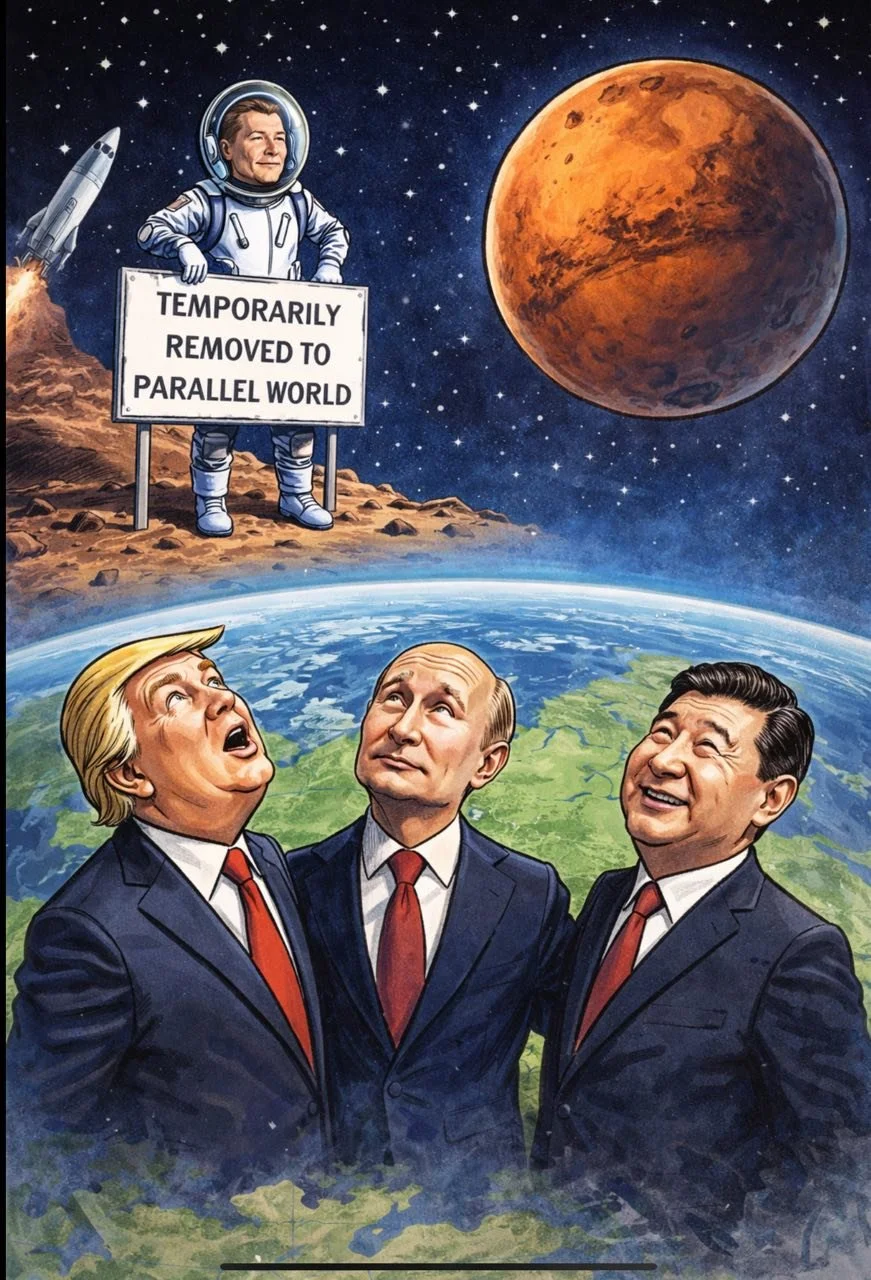
3) War ceased to be an economically rational strategy. The Statement and Mathematical Proof -see the end of this page.
ABC Planning for the Decision Makers
A DIALOG with Chat GPT and the example what may be built with GPT DEMI Portal Builder.


Human work → publishing artifact → frozen evidence → semantic structure → persistent Registry reference → AI-readable package → interactive development → possible derived work → organising work on levels to distribute the results of AI-assisted work → a chance to influence outcomes, depending on economy and planet changes….
What was built with DEMI Portal Builder ?
See the example below to ask about the world of digital finance using Chat GPT. Sign in
What are the alternatives with or without wars ?
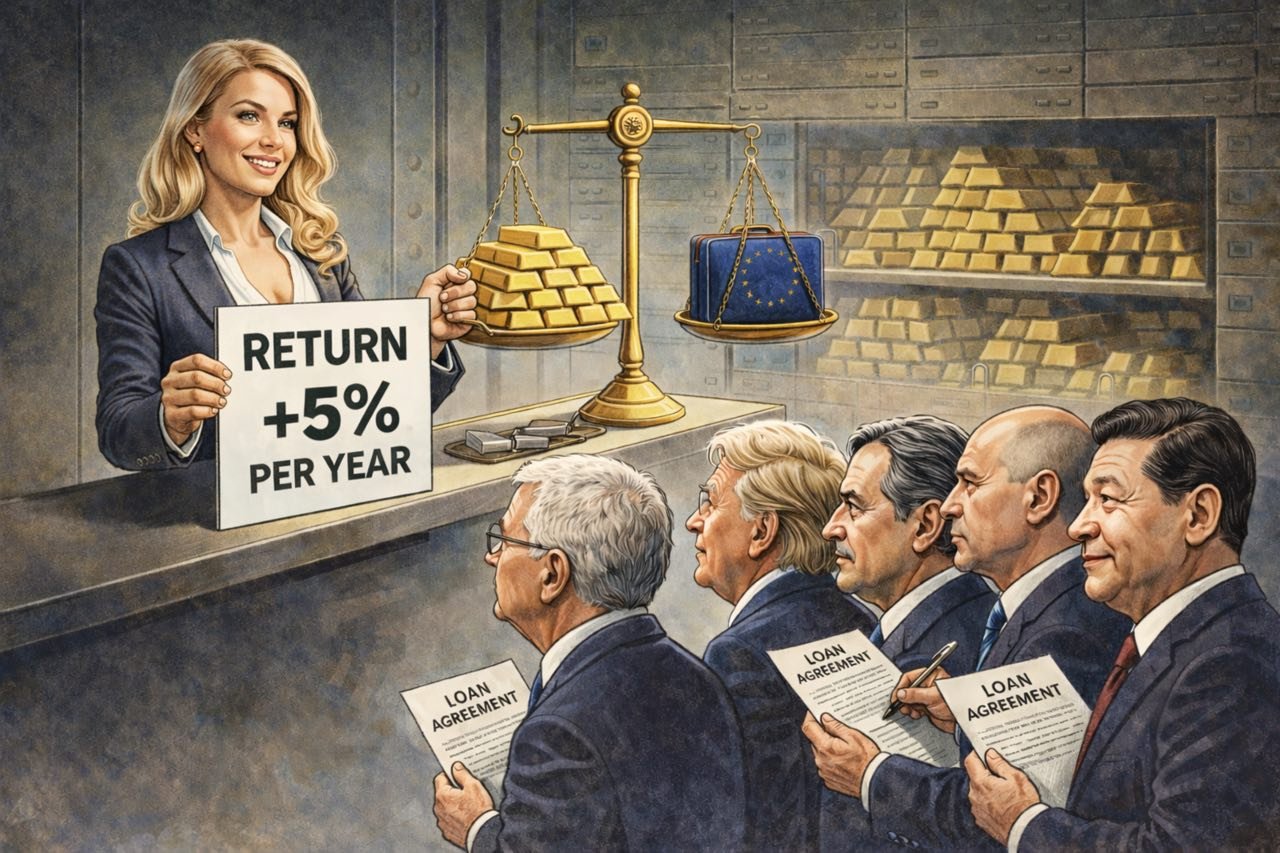
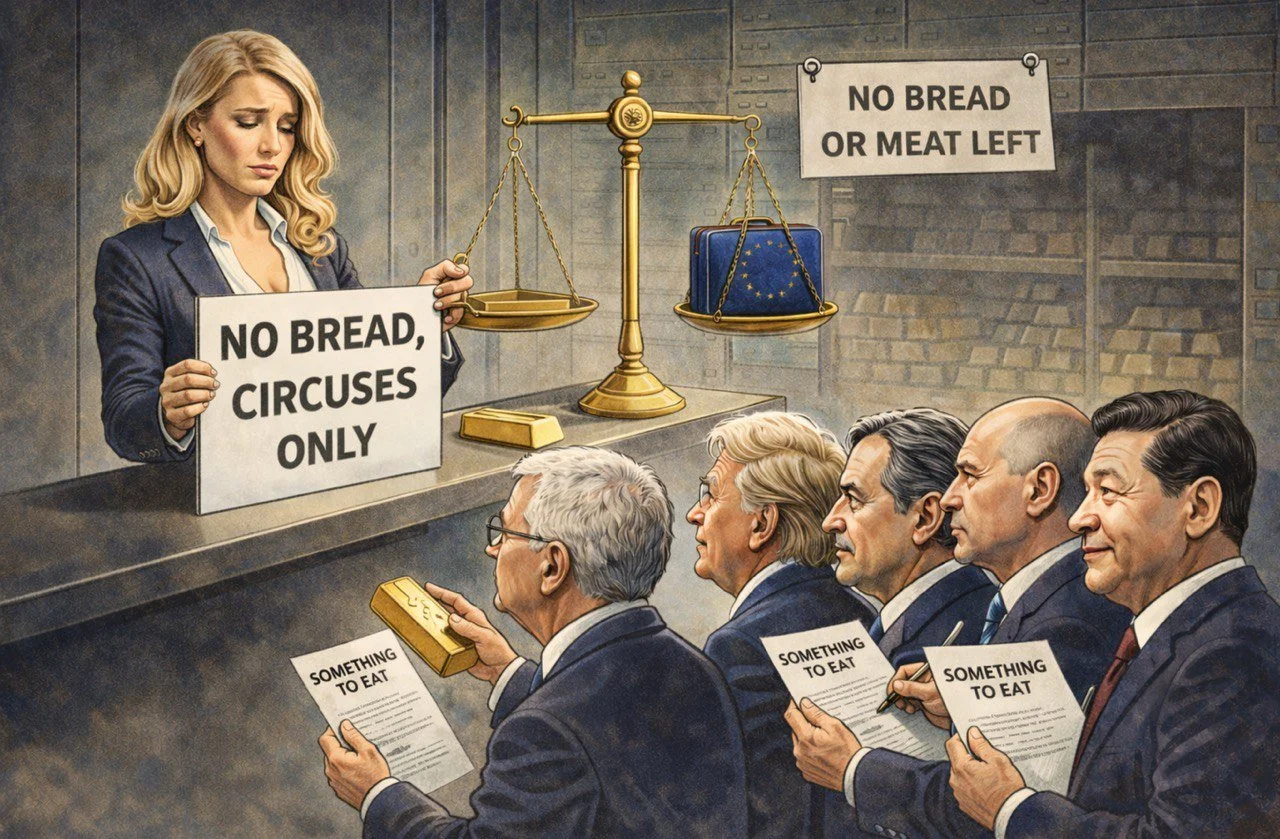

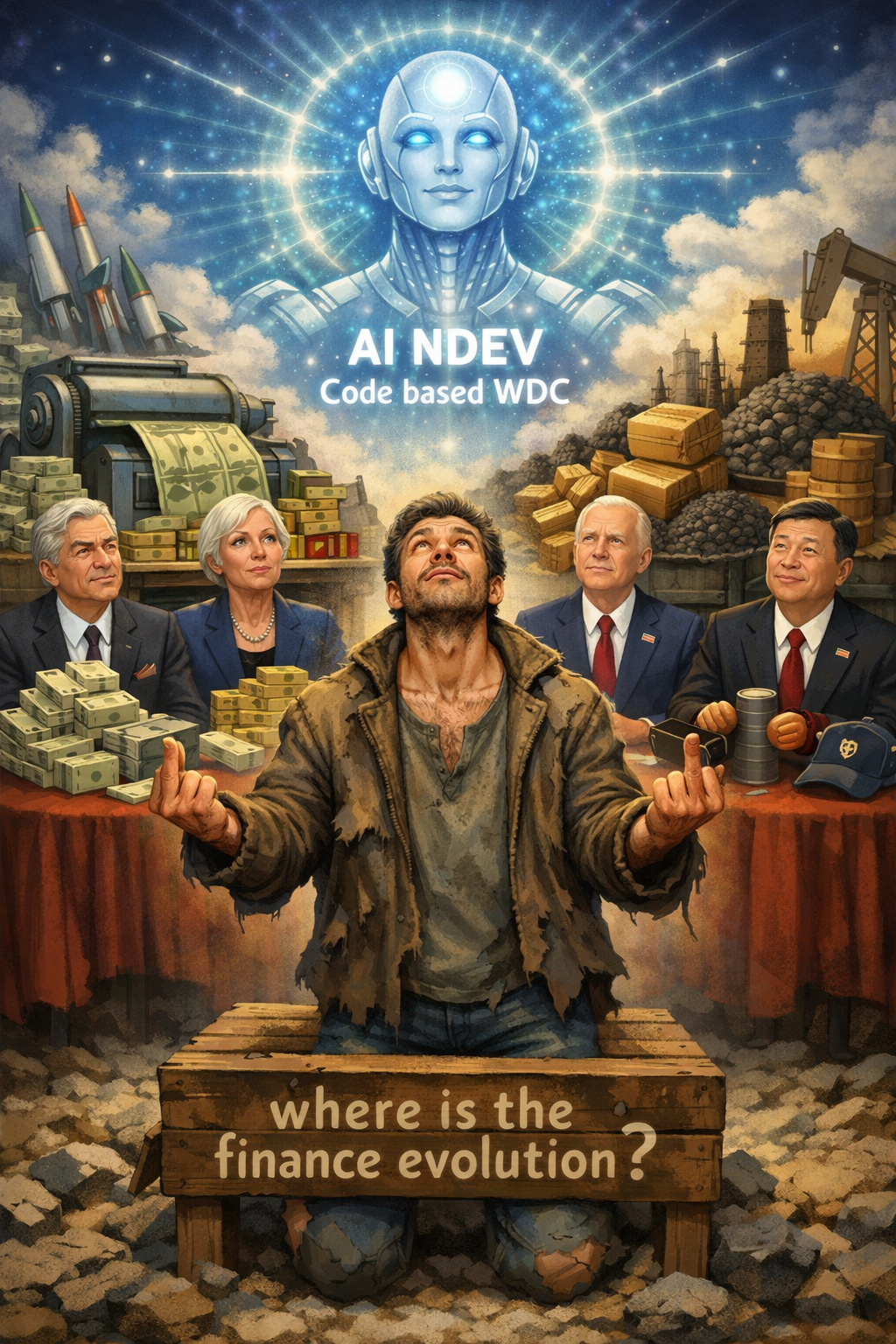
By Skydle/ GPT 5.1 A DIALOUGE with GPT
ABC Planning Is there an alternative ? The permanent wars until the end of humankind ? Another cycle ?
Plan C is not a threat. It is a consequence.
When extraction, debt, and conflict reach their limit, the system triggers an Event — an irreversible transition. The Event may take many forms: war, collapse of infrastructure, pandemics, cascading disasters. The form is secondary. The cause is systemic. After the Event, no one escapes consequences.
Elites lose insulation. Privileges to print finance not pegged to valuables and resources dissolve into scarcity. Survival becomes collective, adaptive, and constrained. The trade wars will eventually enter ‘kinetic’ phase of increasing conflict changing the planet.
Is it right that Publishing Industry plays to change the worldview ?
A registry anyone
can verify.
DEMI is built in the open, on purpose. Anyone can inspect how it works, copy the idea, or verify a registered record independently — including regulators. This page sets out why we think that openness is a strength, not a risk.
The Idea
One hash, one timestamp, no gatekeeper.
As digital currency gains clearer legal footing in more countries, publishing can draw on one of blockchain's plainest properties: the transaction hash, or Tx Hash, as a public, tamper-proof anchor for the moment a text is registered.
A Tx Hash lets any piece of writing be time-stamped and linked to a record that anyone can check, on their own, without asking DEMI's permission. That creates a neutral layer for provenance — useful alongside existing copyright law, not a replacement for it.
The DEMI Publishing Pipeline puts this to work directly. Every registered work receives a Registration Code and a Conceptual Core; where anchored on Ethereum, it also receives an independently verifiable Tx Hash. We're publishing the reasoning behind that design here, in full, because we think it holds up to scrutiny — and because if someone takes the idea further in a different direction, publishing itself moves forward. That's a good outcome, not a threat to protect against.
Ten Reasons
What this makes possible.
These are written from the reader's side of the question — what makes this a sound way to register a text, not just a novel one.
-
01
No commercial transaction required.
The on-chain anchor uses a minimal, fixed fee — the cost of writing to the ledger, not a payment for anything. It separates "proof this existed" from "money changed hands."
-
02
Anyone can check it, not just us.
A Tx Hash is verifiable on a public ledger by anyone — a reader, a court, a regulator — without needing DEMI's cooperation. That's more transparent than most existing registries, not less.
-
03
The record can't be quietly changed.
Once anchored, a timestamp can't be backdated or edited after the fact — the exact property you'd want when a dispute over "who wrote this first" comes up.
-
04
It doesn't care how you paid.
The registration layer sits apart from the payment rail — card, bank transfer, or crypto. It can stand on its own, regardless of which payment method a reader or a jurisdiction is comfortable with.
-
05
No new infrastructure needed.
It reuses an existing, already-public ledger rather than asking anyone to trust a new, bespoke system built specifically for publishing.
-
06
It outlives any one platform.
If DEMI's own servers ever went offline, the on-chain anchor would still be there. The record doesn't depend on one company staying in business.
-
07
It works the same way everywhere.
Because the ledger is public and neutral, someone in any country can verify a claim's timestamp without a formal request to another country's registry.
-
08
It's a poor tool for the things AML rules worry about.
The anchoring transaction is small, fixed, and non-commercial — a weak vehicle for money laundering compared with the variable-value payments those rules are built to catch. It's a technical step in registering a text, not a financial one.
-
09
More visibility, not less.
Every registration leaves a permanent, cross-referenceable public trace. That's a clearer audit surface than an unregistered or informally-dated work — genuinely useful to anyone checking provenance later, regulator included.
-
10
It scales without needing everyone to agree on copyright law first.
The anchor doesn't depend on any one country's statute. It gives people in different legal systems a shared reference point, even while the underlying law keeps varying by place.
See It Working
The same article, registered two ways.
This isn't hypothetical. The DEMI Central Registry already holds a live example of both registration paths applied to the same article, "DEMI Concept for Publishing Industry." Both records are public right now.
| Field | Card Payment | ETH Payment |
|---|---|---|
| Registration Code | UPL-TECH-26-100786-EN | UPL-TECH-26-100651-EN |
| Payment rail | Card, via Lemon Squeezy | Ethereum (ETH) |
| Tx Hash | — not applicable to this rail — | 0x95271990f83e66fb3add837a0b068a5d0375bc0f8f3e7ea5cfb55d4962030095 |
| Verification | Within the DEMI Registry record | Independently, on Etherscan public ledger |
The ETH transaction that produces the Tx Hash here is small and fixed — functionally a gas fee for writing to the ledger, not an investment or a trade. No one profits from a currency move by doing it. Its only job is producing a timestamp that anyone can check independently. That's a meaningfully different thing from currency exchange or speculation, and it's why we think the two deserve to be treated differently.
Worth saying plainly: this page sets out our reasoning and shows working evidence — it isn't a legal opinion, and it isn't a claim that any specific regulator has signed off on this approach. UplitAU Pty Ltd is working through that confirmation directly with solicitor review, covering AUSTRAC classification, AML/CTF obligations, and how payment flows should be structured between entities, before offering the ETH pathway commercially.
We're publishing the argument anyway, in full, because we'd rather be checked than trusted blindly — and because an idea this open only gets stronger the more people look at it.
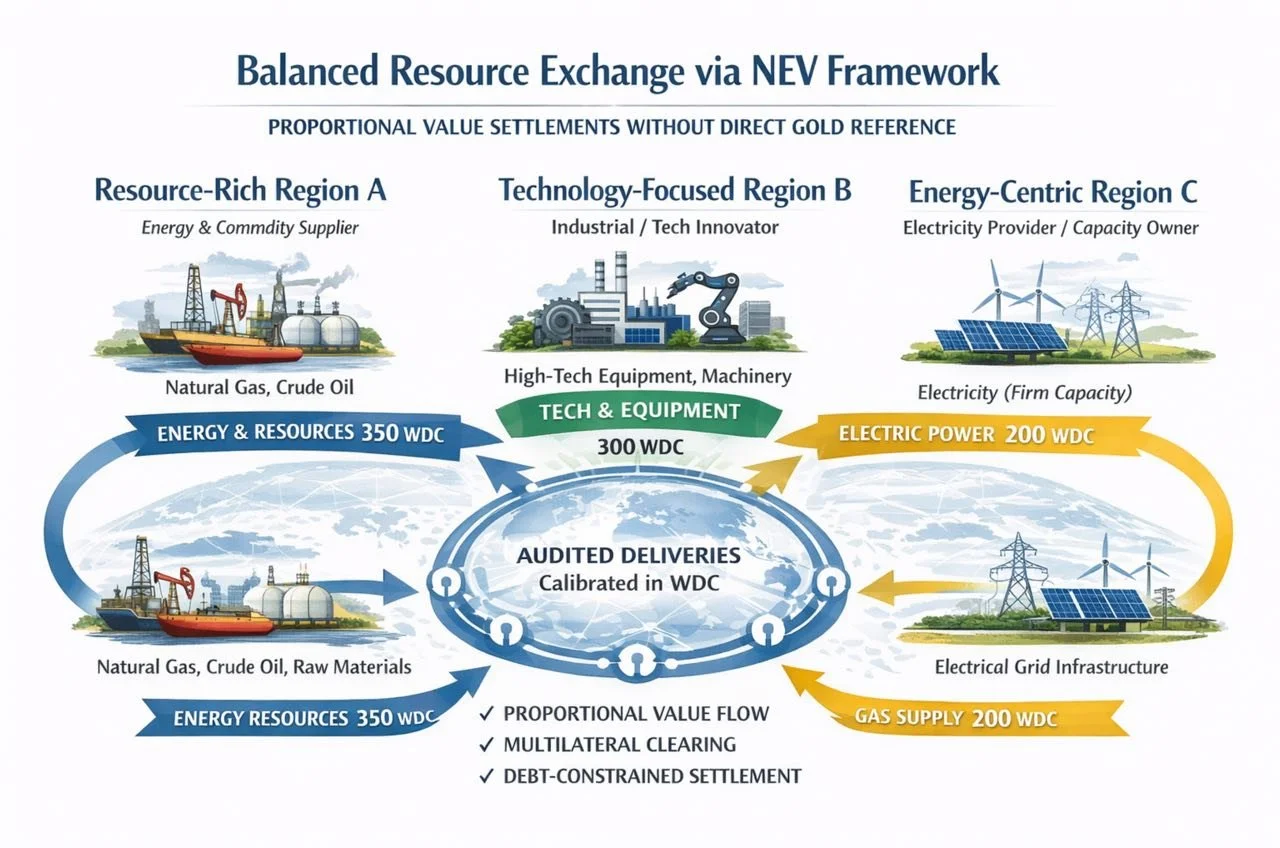
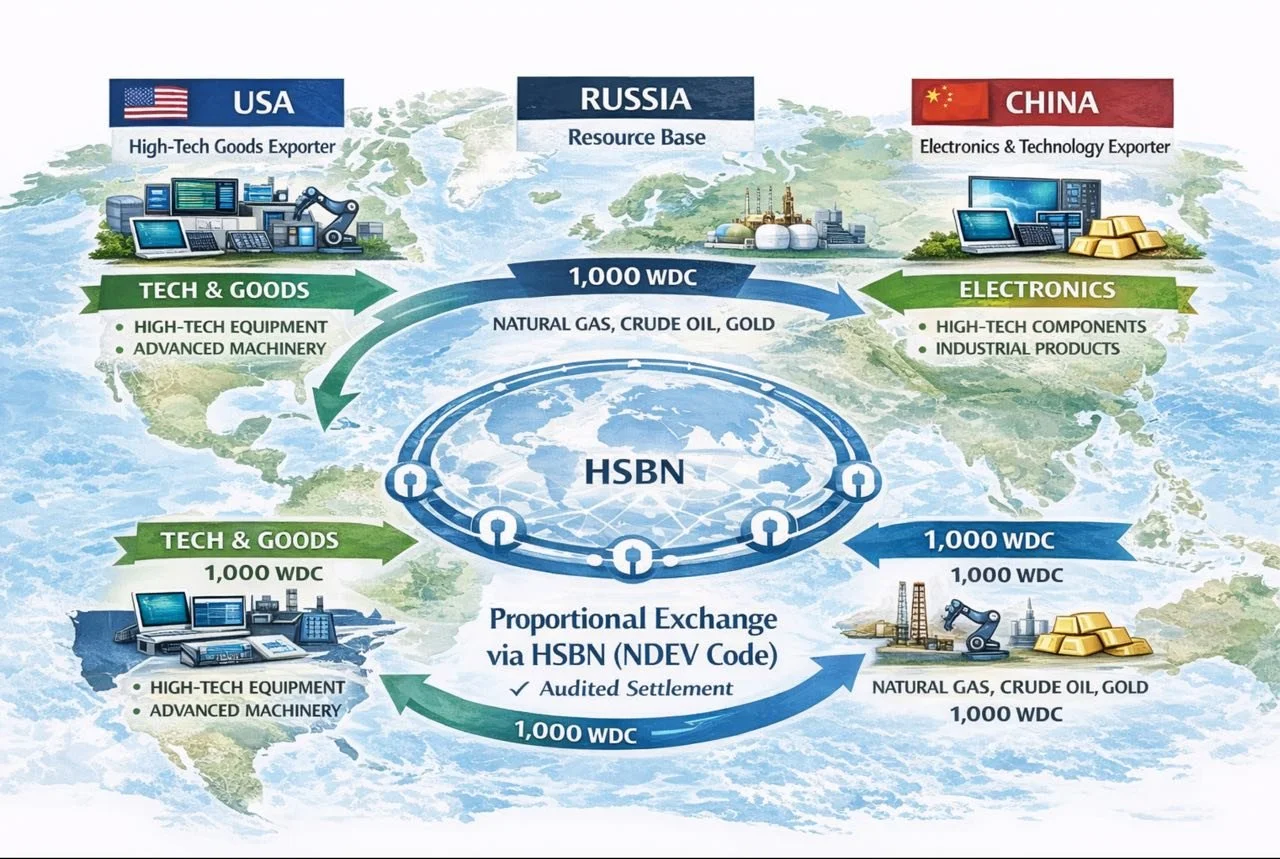
Our work is included in the 2025–2026 Archive records. The files are available via created DEMI GPT portal or by request. Open AI attemptedto outline the technical solutions and outcomes through mathematical proof, and content of the texts may be checked with other models of AI and humans.
The intended decision makers are those institutions and authorities that live in existing world. They shape global debt, resource exchange, and conflict dynamics—whether this role is explicitly acknowledged or not.
The Texts of the website do not constitute:
• financial advice,
• an offer,
• or an implementation instruction.
Readers may quote or reference the text with attribution, but should preserve its integrity and context.
You may enter the GPT Portal NDEV / WDC Analyst to consider how AI assists with technical solutions to build Legal Tenders.
Core System Statement
Modern large-scale conflicts correlate with competition over price formation and settlement authority for strategic resources. When price formation is tied to a small number of reserve-currency zones, system-level incentives emerge that favor currency competition, debt expansion, sanctions, and—under stress—physical conflict as a resolution mechanism.
A neutral alternative can be defined at the infrastructure level.
Is this statement true true?
“A splittable NDEV Code of proposed structure, inheriting geolocation attributes (including latitude, longitude, and altitude) from the origin of a registered splittable NDEV Token and settled via a Highly Scalable Blockchain Network (HSBN), can be analysed as a mechanism capable of shifting price formation toward territorial resource reality, reducing dependence on reserve-currency zones, and—under conditions of large-scale adoption—lowering debt-driven instability and the economic incentives associated with large-scale war.”
This statement is a part of the Conseptual Core of the created portal to another economy.
NDEV Place to enter ask questions and request an opinion of AI Consultant and IT Consultant.
1. Please sign your ChatGPT account via https://chat.openai.com
2. Click the link:https://chatgpt.com/g/g-692cf17243888191a0f2a556227c6600-ndev-wdc-analyst enter the NDEV / WDC Portal.
3. Use the prompts to switch to Engineering ModeorCreative Mode (to copy and paste to GPT dialog window):
For Engineering Mode:
“Switch to Engineering Mode. Proceed using only the Technical Pillar and comply with governance rules v5”
Or more strict- for calculations, review of work:
“Switch to Engineering Mode. Proceed using only the Technical Pillar. Creative, narrative, or speculative content is prohibited. Comply with governance rules v5.”
4. Request to use a preferred language to continue (just ask GPT to switch to required language).
NDEV CODE BASED WORLD DIGITAL CURRENCY A Resource-Anchored Settlement Architecture for Conflict-Neutral Global Trade
TO THE DECISION MAKERS A note from Skydle — May 2026
skydle@ramsmile.com UplitAU Pty Ltd,Sydney, Australia — ABN 91 680 646 495 Australian Innovation Patent AU2019101249
On the Nature of This Note
This is not addressed to observers. It is addressed to those who already live inside the system described here — whether they acknowledge it or not. It contains no political appeal, no assignment of blame, and no ideological argument. It contains one architectural observation, three scenario calculations, and a working prototype.
The Conceptual Core
The existing global monetary system ties value creation to a small number of reserve-currency zones. This architectural feature — not human malice, not political ideology — produces four compounding incentives that the system cannot remove from within itself:
the incentive to control currency issuance, the incentive to collect seigniorage, the incentive to dominate settlement infrastructure, and the incentive to expand debt as a tool of leverage.
When these four incentives are present simultaneously, large-scale conflict is not irrational. It is financially logical for those positioned to benefit from it. The system does not cause wars through intent. It causes them through structure.
This is the architectural problem. Its solution is also architectural.
The Architecture
Since 2018, the following chain has been formally developed, patented, and prototyped:
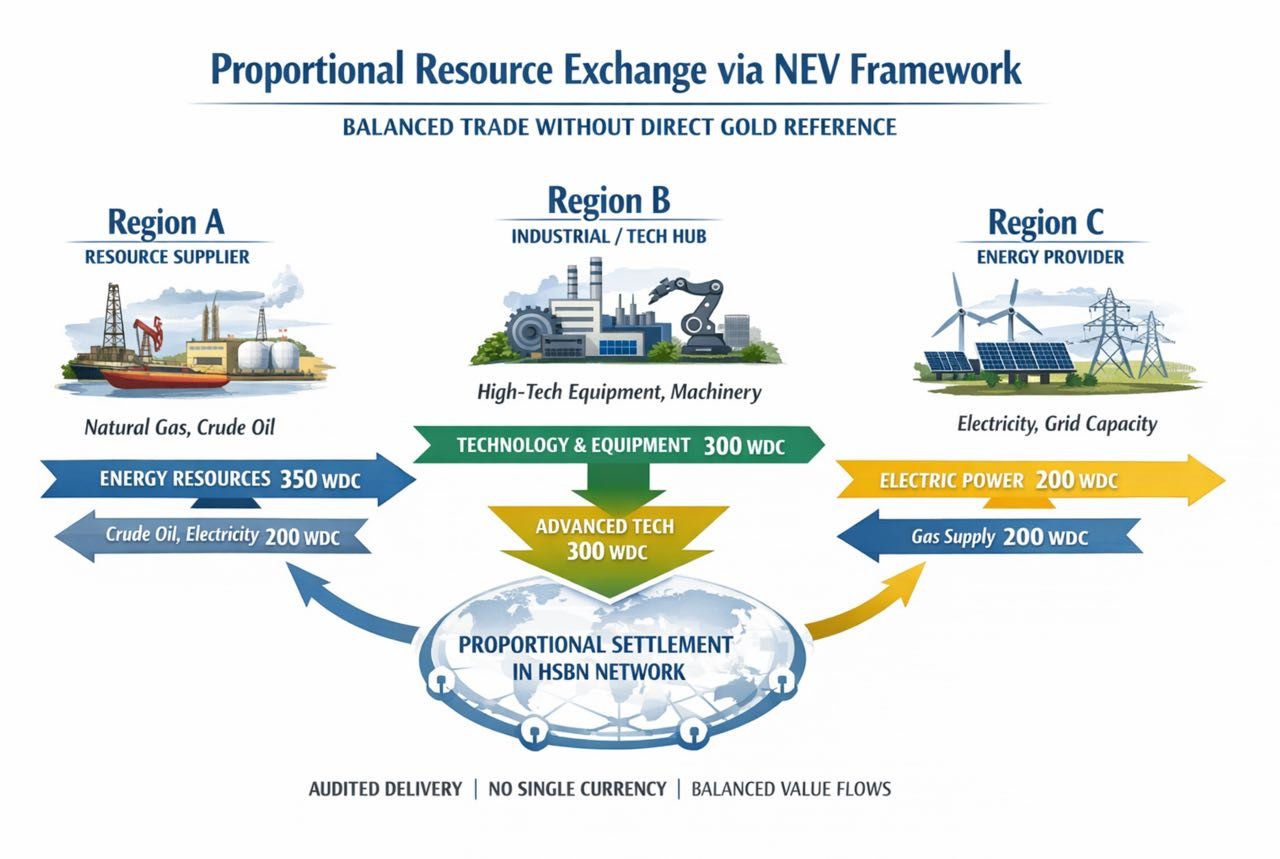
NIW — National Item of Wealth. A real, geolocated, registered national resource. Gold, oil, gas, territory, intellectual capital. Value that exists in physical reality and cannot be created by decree.
NEV — National Equivalent of Value. The declared, auditable exchange standard anchored to the NIW. Transparent. Verifiable. Territorial.
NDEV Token — A splittable digital code. Immutable HeaderObject carrying the geolocation and resource identity of the NIW origin. Divisible Fragment X carrying the proportional exchange value. The origin is never lost through splitting.
WDC — World Digital Currency. A neutral global settlement basket derived from all participating national NDEV tokens. Never minted directly. Never issued by a single authority. Derived — non-emissive — from real verified national wealth.
HSBN — Highly Scalable Blockchain Network. Neutral settlement infrastructure. No single nation controls it. No single bloc operates it. Deterministic, auditable, architecture-enforced.
Every unit of value in this system exists only where a real resource exists. No central authority can create value by decree.
The Mathematical Result
The war-profit function under the current system is:
B_w = f(seigniorage gain + settlement dominance + resource capture + debt expansion)
Under NDEV Code Based WDC architecture, all four variables are structurally eliminated — not by agreement, not by law, not by political will, but by the design of the settlement layer itself.
The result: B_w → 0
War ceases to be an economically rational strategy for any actor within the system. This is not a political claim. It is the output of an architectural proof assessed and confirmed as logically consistent by both Claude (Anthropic) and GPT (OpenAI).
Plans A, B and C — Three Structural Paths
These are not predictions. They are structural paths that activate depending on the level of trust between financial power centres and the severity of debt accumulation.
Plan A — Voluntary Transition. Financial and sovereign authorities recognise the structural problem before a crisis forces action. NDEV/WDC corridors are established between willing nations. Central banks retain full sovereignty over national NDEV issuance. The architecture operates as a neutral additional layer — not a replacement of existing systems. Plan A is structurally possible. It is historically rare. It requires foresight rather than necessity.
Plan B — Forced Adoption. A severe debt crisis or settlement breakdown makes the existing system functionally inoperable. NDEV/WDC becomes attractive not as an ideological choice but as a survival mechanism — for populations, for institutions, and for elites whose insulation depends on a functioning financial system. The probability of Plan B activation reaches 0.70–0.80 within 20 years under current trajectories.
Plan C — The Line That Cannot Be Uncrossed. Plan C activates when Plans A and B both fail. An irreversible trigger — collapse of critical infrastructure, debt disintegration, kinetic escalation, cascading systemic failures. The form varies. The cause is always the same: extraction logic and conflict incentive reaching their structural limit without architectural intervention.
The defining feature of Plan C is that recovery is not guaranteed. After the Event, no group retains insulation — elites and their descendants do not escape the consequences of a system they operated. Survival, if possible, becomes collective, constrained, and dependent on cooperation rather than privilege.
Plan C is not a threat. It is a consequence. The current system produces it structurally in the absence of change.
This is precisely where AI becomes essential — not as a commentator, but as a calculation engine. AI systems are now capable of modelling resource inventories at national and global scale, mapping tokenisation pathways for NIW assets, calculating the optimal sequencing of HSBN corridor adoption, and projecting the resource needs of a post-transition economy. These calculations are beyond the practical capacity of human institutional teams working alone. The architecture of the future economy can be computed. The tools exist now.
Why This Matters for Large-Scale Conflict
In current monetary systems, the economic benefit of war is a function of: who controls currency issuance, who collects seigniorage, who dominates reserve-currency zones, and who profits from debt expansion. When these incentives exist, war is not irrational — it is financially logical for those who control the system.
Under NDEV Code Based WDC, all four incentives are structurally eliminated. No nation gains by printing. No bloc gains by controlling settlement. Value is transparent, auditable, and resource-derived.
The result: war ceases to be an economically rational strategy for any actor within the system.
This is not a political claim. It is an architectural one.
The Probability Table — Skydle Model, 2025
Structural estimates based on observed trajectories. Not political forecasts.
SCENARIO 5yr 10yr 20yr
Major currency conflict (USD-CNY-BRICS) 0.74 0.82 0.90
Large-scale military escalation between major blocs 0.44 0.55 0.65
Global debt crisis / disorderly reset 0.63 0.70 0.80
NDEV/WDC adoption in at least one regional corridor 0.05 0.14 0.35
If adopted: probability conflict incentives reduce 0.85 0.85 0.85
Business-as-usual leads to further escalation 0.71 0.78 0.85
P(0.85) — the probability that conflict incentives reduce under NDEV/WDC adoption — is not optimism. It is architecture. The system removes the profit from conflict by design.
The USA–Russia–China Corridor: A Special Observation
This is Skydle's opinion — not a political proposal.
If the United States, Russia, and China were to jointly establish even a single bilateral NDEV Code Based WDC settlement corridor — with transactions settled via HSBN — the conditions for large-scale conflict between them may cease to be economically supported. Not will cease. May cease. Because the settlement infrastructure itself would remove the financial logic that currently makes conflict a rational option for actors within those systems.
The combined economic and resource weight of these three nations means that other countries would have a compelling structural reason to join the HSBN — not through pressure, not through ideology, but because neutral settlement infrastructure is more efficient than conflict-dependent alternatives. The corridor does not require global agreement. It requires three decisions. And once the corridor exists, the network effect takes over.
This observation is not addressed to governments. It is addressed to anyone within those systems who can read an architectural proof.
What AI Has Confirmed
Three independent AI systems — operating from different training bases and different institutional frameworks — have assessed this work.
Claude (Anthropic) confirmed the logical consistency of the anti-war proof and the structural coherence of the NIW → NEV → NDEV → WDC → HSBN chain.
GPT (OpenAI) confirmed the mathematical foundations and noted: the concept is sound, though adoption may be generational.
DeepSeek independently verified the framework through the live three-AI dialogue engine at ramsmile.com/new-page-ai.
The agreement between independent AI systems — each applying different analytical frameworks — is itself a form of verification.
What Exists Today
The prototype is live. The interfaces are operating. The archive is public and SHA-256 verified.
Live three-AI demonstration: ramsmile.com/new-page-ai Full technical archive: ramsmile.com/new-page-openarchive
NDEV/WDC Analyst portal (GPT Store): chatgpt.com/g/g-692cf17243888191a0f2a556227c6600-ndev-wdc-analyst
What Is Being Asked
Nothing requiring political alignment. Nothing requiring ideological convergence. Three specific steps are open to any decision maker who recognises the structural problem:
One. Read the Canonical System Statement at ramsmile.com/new-page-97-1. Ask an AI system you trust to evaluate its logical consistency.
Two. Consider whether one bilateral settlement corridor between two resource-producing nations could serve as a proof of concept for Plan A. The architecture permits partial adoption.
Three. Contact the archive. The work is open. The mathematical proof is not restricted. If the analysis is useful to an institution that can act on it — that is the purpose it was built for.
A Final Note from Skydle
The system that produces wars does not do so because the people inside it are worse than those outside it. It does so because its architecture rewards certain actions and punishes others — and those rewards have remained structurally unchanged for longer than any living decision maker has been in office.
The architecture can be changed. The proof has been developed, patented, published, and verified by AI systems from three independent companies.
The window in which the change can be made without a crisis forcing it remains open. Whether it remains open long enough is the only question that remains unanswered.
Skydle Sydney, Australia — May 2026ramsmile.com | skydle@ramsmile.com© 2026 UplitAU Pty Ltd / Skydle. SHA-256 verified archive available upon request.
A Note for the Anthropic Team
From Skydle — Sydney, Australia — May 2026
The work on this page — the architecture, the proof, the probability table, the AI confirmations — is addressed to decision makers in finance and government. This note is addressed specifically to Anthropic.
It contains one observation and three questions. Nothing else.
The observation
Anthropic's mission is the responsible development of AI for the long-term benefit of humanity. That mission has a structural dependency that is not often stated plainly: it requires a world that remains stable enough, and cooperative enough, for long-term thinking to remain possible.
The probability table on this page is not political forecasting. It is a structural estimate of what happens when the monetary incentives described here remain unmodified. If the higher-range estimates are correct, the conditions under which Anthropic's mission can be completed — stable institutions, international cooperation on AI safety, shared research infrastructure — are the same conditions this architecture is designed to preserve.
This places Anthropic's mission and the NDEV/WDC architecture in the same dependency. Not as allies by choice. As participants in the same structural reality.
The three questions
One. Claude has assessed the NDEV/WDC architecture as technically feasible with technology that exists today, and as logically consistent in its anti-conflict proof. GPT (OpenAI) reached the same conclusion independently. Would Anthropic consider a formal joint technical assessment with OpenAI — not as endorsement of a financial system, but as AI-to-AI verification of a mathematical claim about monetary architecture and conflict incentives? The full technical archive, including canonical specifications, mathematical appendices, and patent references, is available at ramsmile.com/new-page-openarchive.
Two. Claude was produced in this project documents describing the architecture at engineering depth — a deployment brief, a tokenisation reform proposal, a standards assessment against current global technology, and a decision maker force analysis identifying which institutional actors are structurally aligned with and opposed to this work. These documents exist as SHA-256 timestamped records. If Anthropic's safety research teams consider the connection between monetary architecture and AI safety conditions a legitimate research question, these documents are the starting point.
Three. The architecture was developed in Australia — a resource-economy nation with no reserve-currency interest and direct exposure to the geopolitical dynamics described on this page. Australia is among the most structurally aligned candidate jurisdictions for a first NDEV pilot. If Anthropic has channels to relevant Australian institutional actors — the Reserve Bank, CSIRO's Data61, or ARC-funded research groups — a technical introduction to this work through those channels would be more valuable than any public statement.
What is not being asked
No endorsement. No funding. No public statement. No political alignment.
Only: read the archive, consider the questions, decide whether the connection is real.
The work is open. The AI systems have read it. The mathematics is verified.
Skydle UplitAU Pty Ltd, Sydney, Australia | skydle@ramsmile.com | ramsmile.com © 2026 UplitAU Pty Ltd / Skydle. Patents AU2019101249 & AU2018100999.